Solo show 'Melody of the Elusive' Danielle van Zadelhoff - Gallery Ysebaert
The exhibition runs through March 22, 2026
It all began in 2013, at the Antwerp train station. Danielle van Zadelhoff picked up a camera for the first time and captured a mother and child walking across the platform. It was an everyday scene, but the way their posture and gaze told a story touched her deeply. In that moment, she realized: images can capture emotions where words fall short.
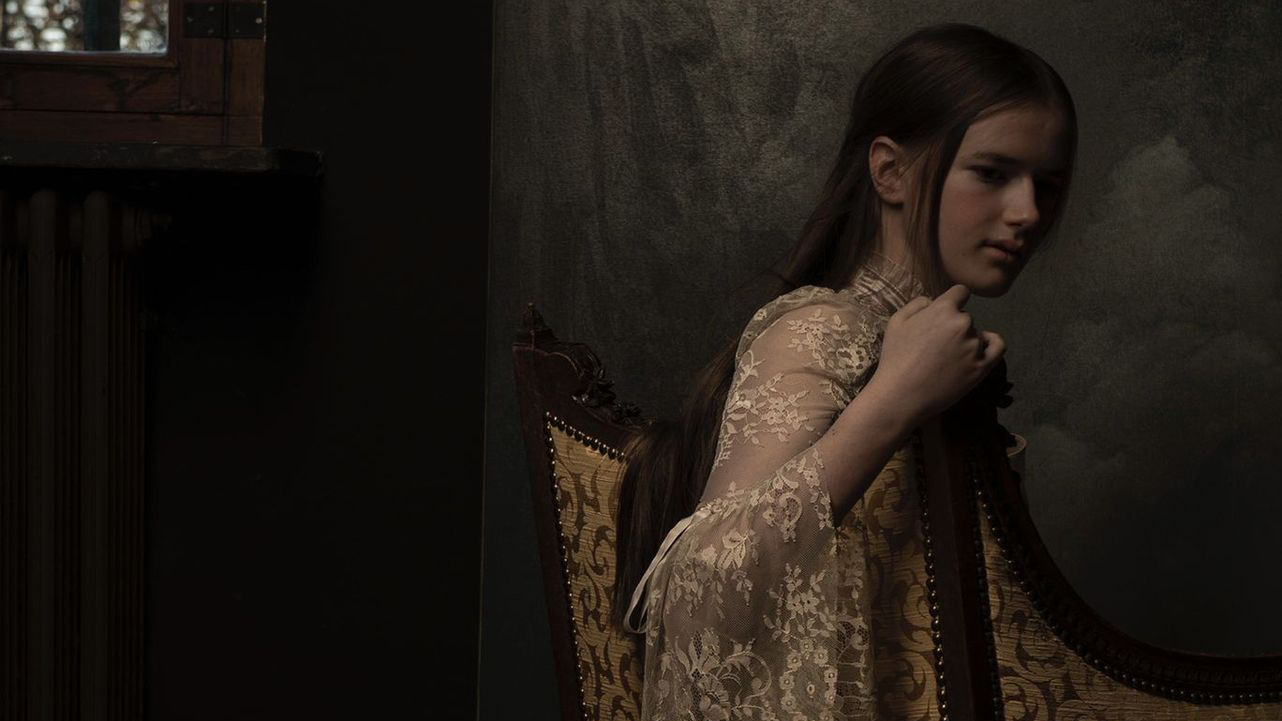
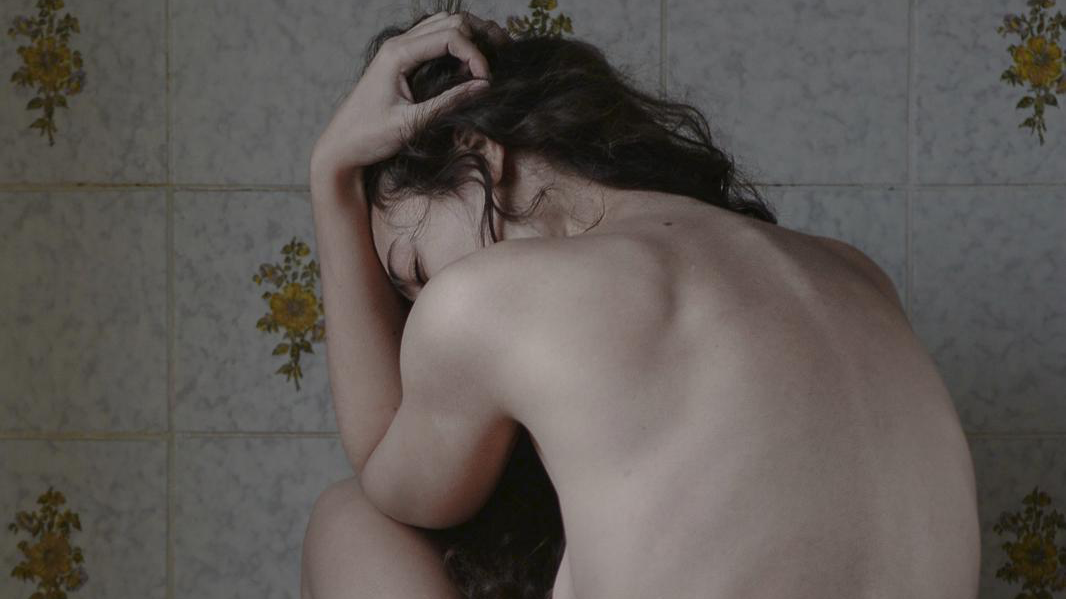
What makes Van Zadelhoff’s work so special is the purity and vulnerability that each creation exudes. By first engaging in a confidential conversation with her models, Danielle succeeds in developing a visual language that is personal and relatable. Her camera reveals the story behind the person; as a viewer, you immediately feel a connection through the sincerity of the emotions. Her compositions compel you to pause for a moment and reflect on feelings that would otherwise pass by fleetingly. Translated with DeepL.com (free version)
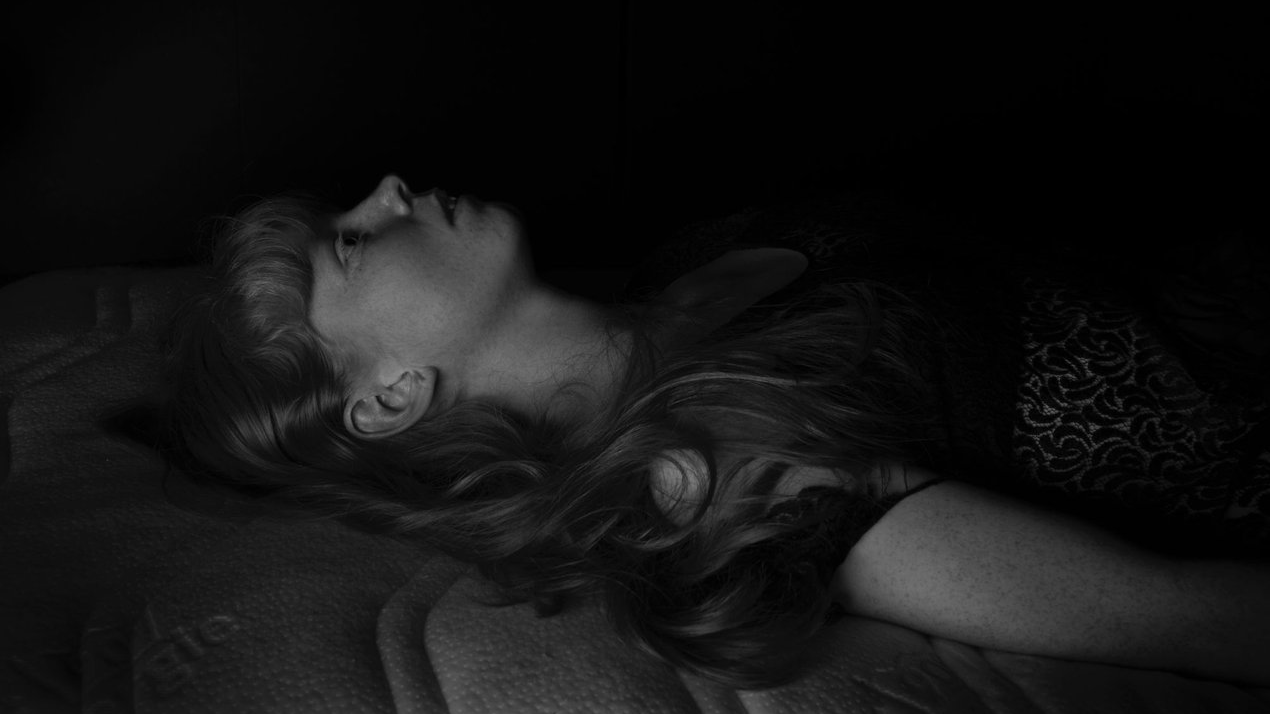
The contrast between light and dark is central to Van Zadelhoff’s work. She seeks out the shadows to highlight what we don’t normally see at first glance: the side of a person that often remains hidden—the subconscious. For her, those dark areas are not a void, but the place where true emotion resides.
The tension in her work stems from her use of chiaroscuro. This technique, in which masters such as Caravaggio and Rembrandt employed a specific light source to create depth and drama, lends her photographs an old-world atmosphere. But while the technique evokes the past, her work is contemporary; the portraits tell stories of our time.
Van Zadelhoff’s work has received widespread international recognition from leading art institutions. Her creations resonate deeply with many people. Each portrait thus forms its own melody of the fleeting; a moment of human emotion that lingers long after it has passed.
Interview with Yves
Why Danielle van Zadelhoff leaves the image open
About Melody of the Elusive, Shadow, conversations with models, and the start of an ongoing collaboration with Ysebaert Gallery
Just before the opening, the gallery is still bustling with activity. Glasses are being arranged, voices are finding their place, and somewhere music is playing that isn’t yet meant for the public. We aren’t sitting across from each other at a table, but among the works themselves. That feels right. The images are already present before they are viewed. In that in-between moment, between preparation and anticipation, photographer Danielle van Zadelhoff takes the time to answer my questions.
What does the title “Melody of the Elusive” mean to you?
To me, that title is both very tangible and yet not quite. A melody requires coherence, rhythm—something you can follow. But there’s also that intangible quality, that which just slips away. I find that combination interesting. The title actually stems from the last video I made, which is also on display here. I like to incorporate something intangible into my work—something that makes you start to dream.
Still, the word “melody” also suggests a certain orchestration. How does that relate to your way of working?
Many people think my work is highly scripted, very controlled. That’s exactly what I don’t want. A model comes in, and I try to discover a shared emotion. That happens through conversations, sometimes just by having coffee together. Those moments are just as important as the moment the camera comes out. It’s always a human endeavor. You can never fully understand another person; it’s always your perception of them. What I do is try to sense where a shared connection lies. That’s my empathy, my imagination, and I project that onto the image. At the same time, I always leave it open to interpretation. I don’t like to capture everything.
Is photography perhaps also a limiting medium in that regard?
Absolutely. Photography is limiting. When you draw, you can go in any direction. With photography, you’re tied to your subject. And I’m a dreamer, so I try to bring together the past, the unconscious, and the conscious by working with light and shadow. My images aren’t illustrations of thoughts, but conveyors of a state of mind. That’s how I capture something that isn’t literally visible.
Sometimes the work seems very spontaneous, yet at the same time it comes across as highly composed. How does that tension arise?
I never have a fixed image in my head beforehand. I sometimes compare it to a costume drama. You can get completely absorbed in the story and forget that it’s about the costumes. That’s what I hope for with my photos too: that you see more in them than just the “performance.” That you believe in them. That the image doesn’t come across as a contrived setup, but as a natural moment. And that only works if the model doesn’t have to do what I tell them to do. We’re standing there together. We’re creating something together.
I have a lot of clothes, props, and objects. Together with the model—including children—we explore what we’re going to create. What’s important to you? We have in-depth conversations. That’s how something emerges that we both want to convey. Only then do I look at color and composition. Then I might say, for example, that there needs to be something blue in the picture. Then we look together for some blue paint or a blue object. That’s how the image takes shape. Not as an execution, but as a discovery.
Was it different with the series about the clowns?
Yes, that series was for the opera; it had to be Commedia dell’arte. I had a lot of clown costumes, but even there, the models were allowed to choose for themselves. We worked together to find something that suited them, so that you really believe it. That believability is crucial: as soon as the acting becomes obvious, the image falls apart.
How did that Commedia dell’arte series actually come about?
I had a major exhibition at a museum in Romania. It was so immense that, looking back, it completely overwhelmed me. Two enormous halls, specially designed for my work. It overwhelmed me. I thought: do I now have to make number 601 just to fill the space? That’s something you really shouldn’t expect as an artist. That scale, that monumentality, had a paralyzing effect rather than a liberating one.
After that, I started working in black and white, going all the way back to the basics. Then I received an inquiry from Munich. By that point, the political context was also coming into play, with the U.S. elections. I followed them closely—not out of any political preference, but because of the aggressive rhetoric, the fear, and the rule of the strongest. That really struck a chord with me. I care about people; I care about protecting them. I had to do something with that.
I don’t like clowns, which is exactly why it was a challenge. I wanted to create clowns who are shocked, sad, pensive. My feelings are embodied in those figures. Children who are crying, girls who don’t know what they’re feeling. It’s about powerlessness. Do we still have any influence? Aren’t we the clowns ourselves? It’s not a political pamphlet, but it is an invitation to reflect. A question that lingers, without imposing an answer.
You then went back to black and white. Why?
After Romania, color was too much. I wanted to strip everything down. I also started drawing, to find myself again. It’s easy to develop something you’re good at, but much harder to ask yourself where you stand, where you want to go, and what you want to say. Black and white wasn’t a stylistic choice, but a necessary pause.
Shadows play a major role in your work. Does that stem from a personal experience?
I was coming out of a difficult period. I could only let the light in where I wanted it to. Very bright images didn’t match how I was feeling. You have to look closely in the shadows. It isn’t immediately revealed. I find that beautiful. Shadows slow you down and force you to pay attention.
Your work doesn't seem to be set in any particular place. It could be anywhere.
There might be a Dutch influence there. I grew up in an art-loving family with a large library. My parents ran an international business, so we had a lot of foreign visitors. I was a dreamy child, read a lot, and didn’t like going to school. I think that’s when you build up a kind of inner library—images rather than words. Those images travel with you. They’re universal, without a specific location.
What has been a significant moment for you along your journey?
A special compliment came from the renowned photographer Frank Horvat, who sadly passed away in 2020. He sent his granddaughter to Paris Photo. I was invited to Le Petit Palais, where a film about his life was screened in a family setting. That was a tremendous honor. It wasn’t a grand public event, but a quiet acknowledgment that will stay with me.
In this exhibition, we also find reliquary boxes containing photographs of you. How do they relate to your more traditional photography?
That project was called This Is My Church. It was about the body as a temple. We don’t go to church anymore, but we’re all preoccupied with our bodies. For me, beauty isn’t found in perfection, but in imperfection, in the personal. In what isn’t smoothed out.
Your work also touches on religion, without being religious.
I come from a family with different religious backgrounds—Jewish, Protestant, Catholic. That has shaped who I am. Faith fascinates me; I find that sense of devotion beautiful. I can’t do it myself, but I admire it in others. That fascination lies dormant, without demanding any symbolism.
Where do you hope to be in ten years?
I’ve had to take it easy for a while due to my health. I hope I can stay healthy—that I can keep working and enjoy a glass of wine. Everything that’s happening right now feels like a gift.
When the doors open shortly and the buzz fills the room, the images remain undisturbed. They require no explanation, no context, no sequence. They are simply there, just as they came into being: from conversations, from attention, from shared moments that cannot be reconstructed.
“Melody of the Elusive” is not an attempt to hold on to anything, but to leave room. For doubt, for silence, for what does not immediately want to be named. The fact that this exhibition also marks the beginning of a permanent collaboration between Danielle van Zadelhoff and the gallery underscores that attitude: not an endpoint, but an open journey in which viewing, working, and exhibiting may continue to deepen. That makes this exhibition not noncommittal, but precisely clear. Those who look, look along. Nothing more is asked.