SANTIAGO YDANES - SOLOSHOW
21.11.2026 - 10.01.2027
Santiago Ydáñez (b. 1967, Jaén) paints with rough, expressive brushstrokes what he feels and wants to express at that moment. Throughout his oeuvre, several themes and recurring threads return time and again. Portraits, animals, bodies and references to history and mythology are connected by an underlying darkness, a raw emotionality and a strong visceral or physical impact that, in this exhibition, result in a darkly romantic beauty. Identity, memory, humanity and nature form recurring themes in Ydáñez's work.
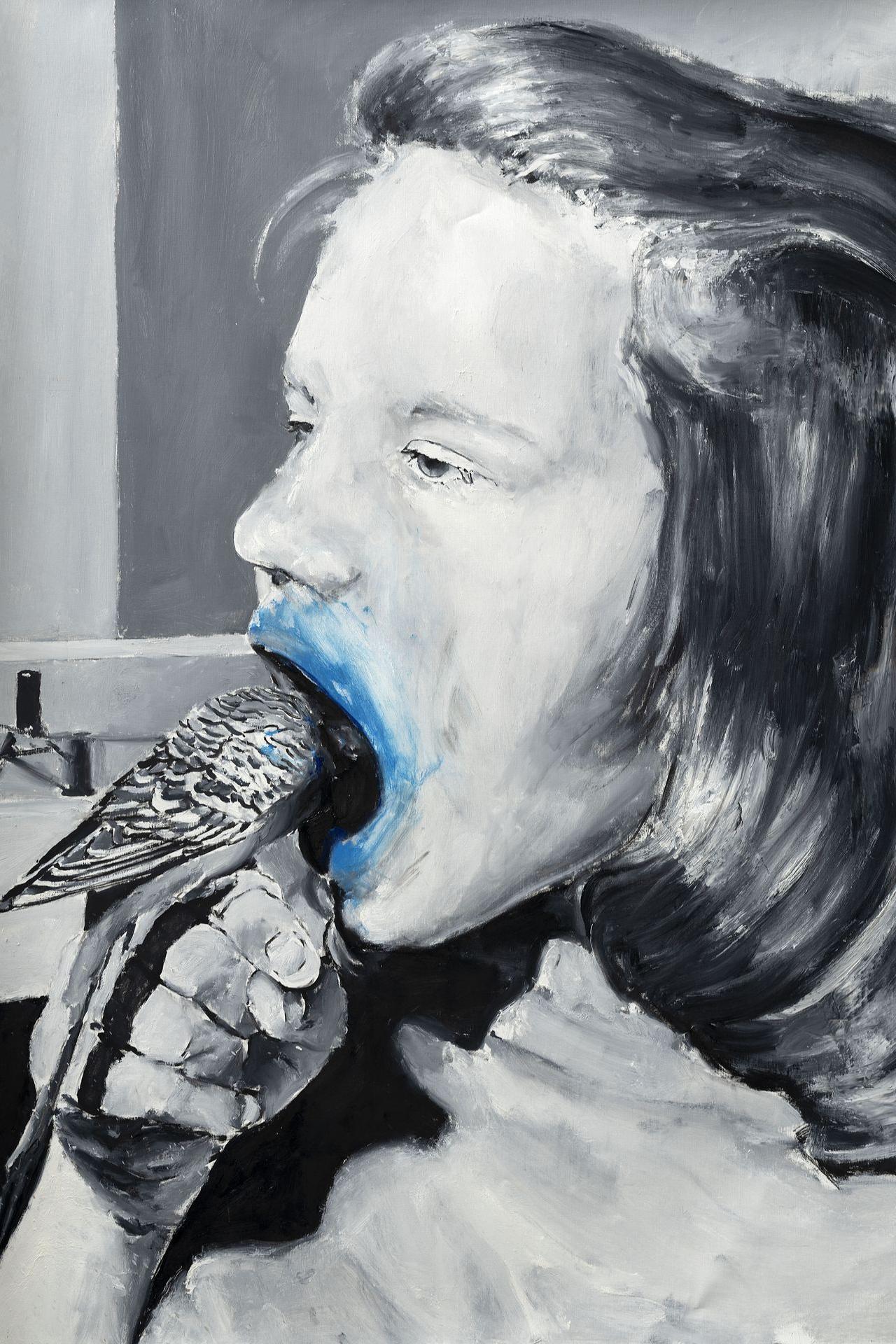
Animals also play an important role within his oeuvre. Birds, for instance, can refer to the mythical paradise. Ydáñez has been drawing owls since he was a child, for him a mysterious animal representing darkness and the night. Another striking image in this exhibition is that of the girl who appears to be devouring a bird. What does the artist mean by this? That not all animals should end up in the human stomach? Ydáñez explores the relationship between humans and animals. What can the different animals tell us? Their symbolism, but perhaps also their untouched rawness, which contrasts with, or precisely resembles, the human quirks that Ydáñez depicts. According to the artist, we should look at animals to rediscover our own nature, which has become concealed by a false morality. Yet in this exhibition a softer, more serene side of his work can also be found. We see, in particular, more recent works in which a dark romanticism is present.
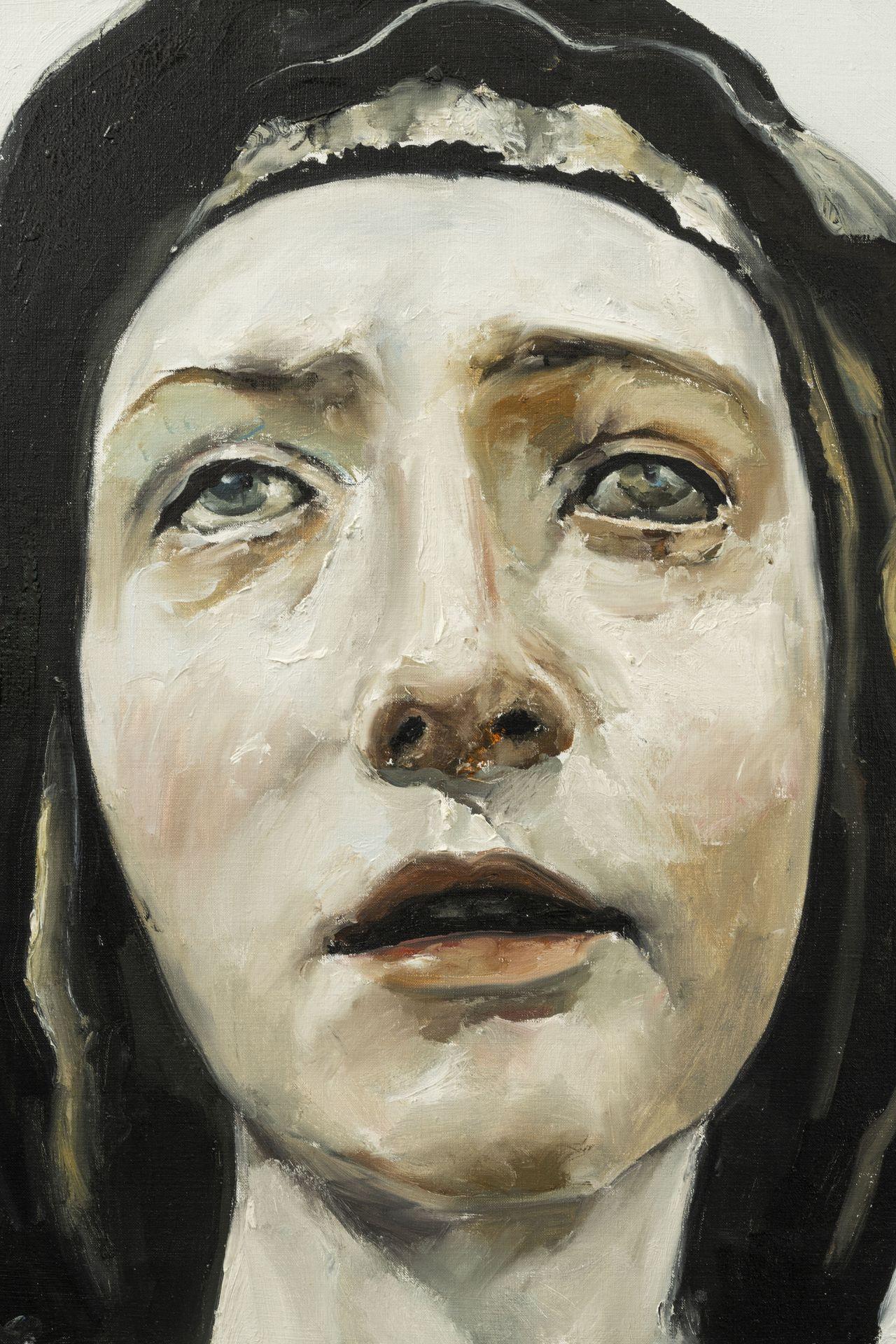
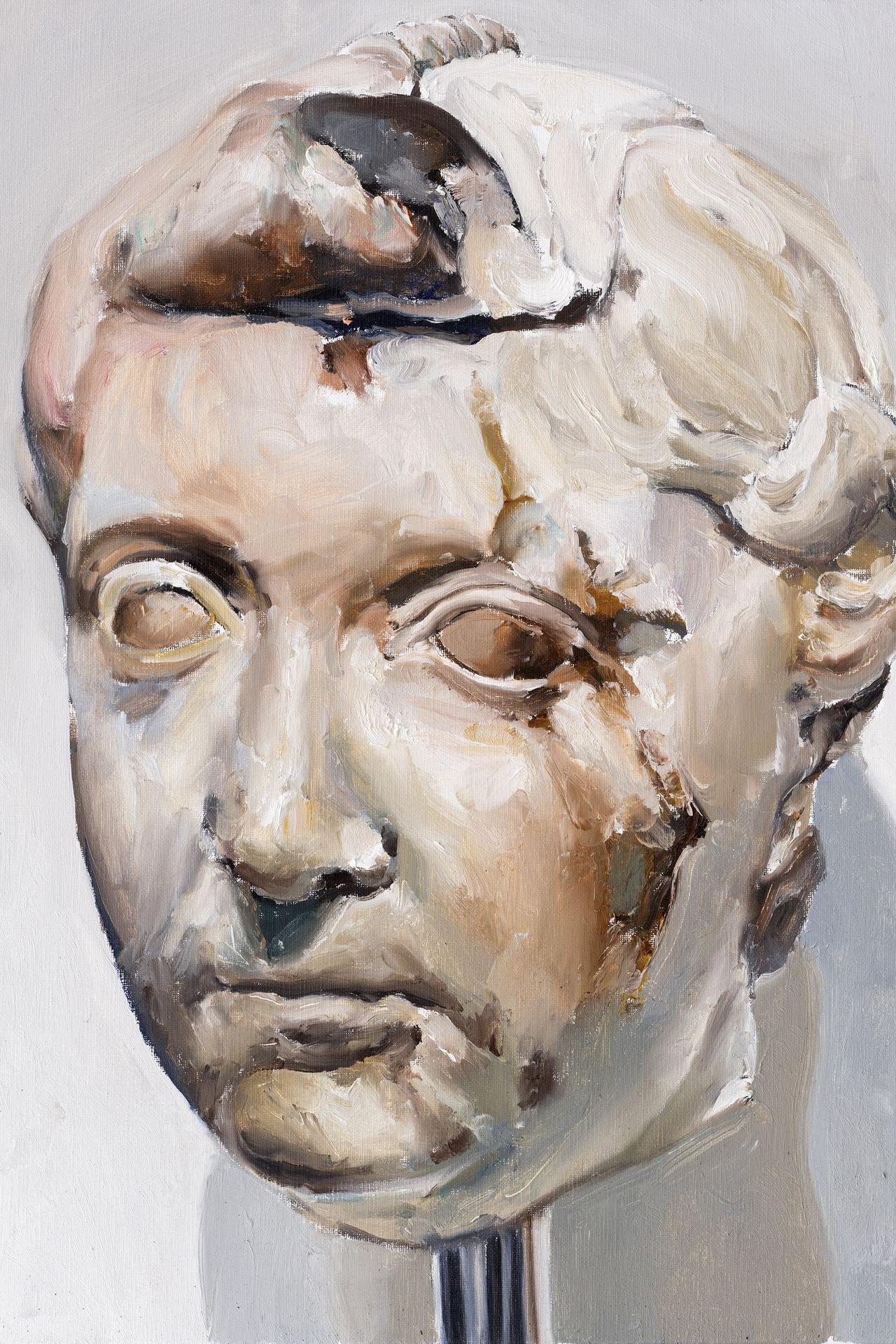
Ydáñez works in a highly autobiographical and strongly referential manner. In his paintings and drawings we see references to classical works of art history, popular characters from cinema and even religious figures. He is also an avid collector of objects found at antique fairs and flea markets. These regularly form a source of inspiration for his work and are absorbed into his visual language. His works carry a secular, spiritual and physical quality, as well as a human and animalistic brutality in equal measure. Recognisable images take on a dark layer that evokes an almost uncomfortable feeling. Beauty and discomfort, stillness and tension exist side by side. As art historian and curator Fernando Francés describes it, this almost gruesome beauty is as if we are confronted with the scream present in many of his faces, one we never actually hear. The artist holds up a mirror to us and invites us to examine our own personal myths, raw emotions and animalistic aspects. His faces are given a layer of white or blue paint, forming an almost readable landscape.
His paintings in acrylic or oil on canvas, as well as his drawings, are often characterised by distinctive shades of grey. His brushwork is direct and energetic, sometimes rough, sometimes surprisingly refined. Many works are built around a limited colour palette, which makes the light, the skin and the material quality of the paint stand out all the more strongly. Throughout his oeuvre, however, colour has increasingly made its entrance, revealing an evolution in this respect as well.
This exhibition aims to show a variety of works that together are representative of Ydáñez's oeuvre. From an almost retrospective perspective, Gallery Ysebaert focuses on the various themes that recur time and again throughout his career. By bringing together works from different periods, it becomes possible to dive deeper into his visual language and to truly experience the evolution of his work. Santiago Ydáñez is one of Gallery Ysebaert's core artists, who has already built a very strong international track record with numerous exhibitions worldwide. In 2017, Ydáñez exhibited jointly in Malaga with Daniëlle van Zadelhoff, likewise one of our core artists. In 2025, Santiago took part in an exhibition at the Snijders & Rockoxhuis Museum in Antwerp, where his work was placed in dialogue with Rubens, Van Dyck, Snijders, Brueghel and other old masters. He worked on Puccini's Tosca at De Munt in Brussels, a production by Rafael R. Villalobos. This exhibition at Gallery Ysebaert marks his first major solo exhibition in Belgium.
Curated by Anneslies Ysebaert
Text Yirka De Brucker